

Symptoms That Require Professional Attention
If your property exhibits any of the following issues, immediate intervention halts wood rot and prevents structural decking failure:
Signs of Storm Damage You Can See From the Ground in Clearwater
Following severe tropical storms, nor'easters, or hurricanes hitting the Pinellas peninsula, safety demands that homeowners stay off wet, steep roofs. Fortunately, substantial evidence of storm damage is clearly visible from the ground using binoculars or a smartphone zoom.
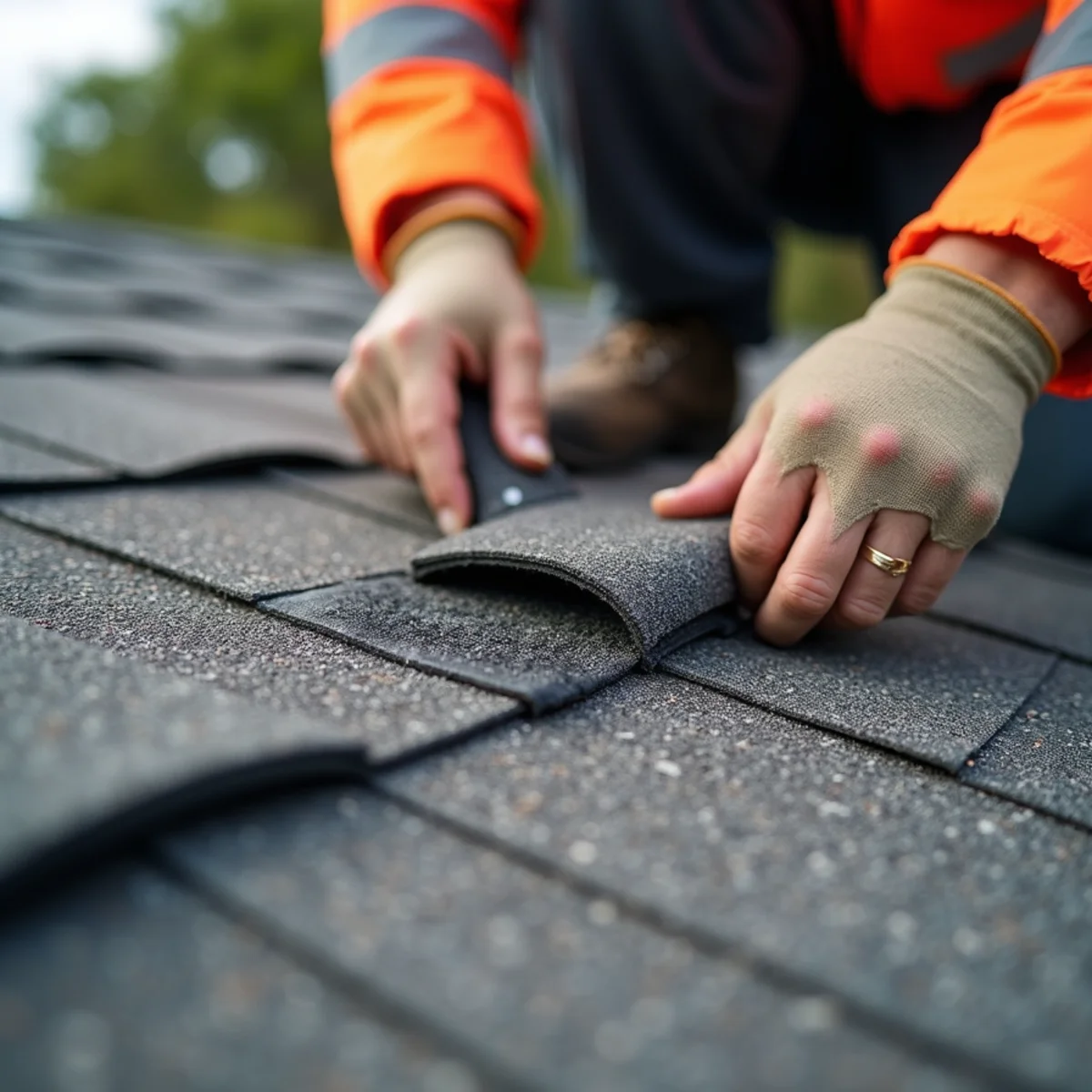
Look first for displaced or missing shingles along the ridge cap, hips, and lower eaves—the high-pressure aerodynamic uplift zones where wind velocity accelerates as it crests the roof pitch. On asphalt shingle roofs, wind uplift often breaks the adhesive thermal bond between shingle courses without detaching the shingle completely. When the wind subsides, the tab settles back down, but a subtle horizontal crease line forms across the upper portion of the tab where the fiberglass mat fractured.
Check your lawn, pool deck, and perimeter walkways for roofing debris: shingle tabs, pieces of aluminum drip edge, sections of fascia, and broken clay or concrete tile fragments. Inspect gutters and downspouts: an abnormal wash of black granules indicates severe wind scrub or hail impact, which strips the shingle's ultraviolet defense and accelerates asphalt degradation.
Hidden Damage: Wet Decking, Soffit Blowouts, and Water in the Attic
A roof can appear reasonably intact from the street while concealing serious structural compromise underneath. During intense tropical systems like Hurricanes Helene and Milton, sustained high winds push coastal water under extreme pressure horizontally against eaves and soffits.
When aluminum or vinyl soffit panels blow out or shift, pressurized storm winds funnel directly into the attic, carrying gallons of wind-driven mist. This saturates blown-in fiberglass or cellulose insulation, collapsing ceiling drywall hours after the rain has ceased. Furthermore, water penetrating cracked underlayment can track invisibly between the plywood decking and the insulation, rotting sheathing from the underside.
Our technicians conduct comprehensive attic and framing inspections, checking the underside of roof sheathing for moisture discoloration, checking roof-to-wall hurricane clips for salt-corrosion stress, and testing the structural firmness of the decking around all vents and chimney chases.
Need Urgent Storm Damage Roof Repair in Clearwater?
Call (773) 207-0769 for immediate routing to our nearest Pinellas County crew. Written estimates upfront.
What Helene and Milton Showed About Pinellas County Roofs in 2024
In autumn 2024, Pinellas County weathered the unprecedented impact of Hurricane Helene on September 26, followed less than two weeks later by Hurricane Milton on October 9-10. Milton brought peak wind gusts exceeding 100 mph and dumped up to 18 inches of rain across local communities, cutting electrical power to roughly 72% of customers and damaging an estimated 40,000 Pinellas residences.
The forensic roofing data from these dual storms revealed two critical realities: First, roofs installed prior to the 2007 Florida Building Code updates suffered vastly higher rates of sheathing uplift and unsealed tab failures because of smooth-shank nailing and lack of secondary water barriers. Second, homes with aged underlayment under concrete tiles suffered extensive interior water damage despite having zero broken exterior tiles, as sustained gale winds forced deluge into tile laps.
Rising Roofers' network responds with full knowledge of these exact failure patterns, providing resilient repairs engineered to withstand future Florida storm seasons.
Documenting Damage for Florida Homeowners Insurance Claims
Navigating a Florida property insurance claim requires meticulous, objective documentation. Florida statute (§ 489.147) strictly regulates roofing contractors, prohibiting deceptive promises of 'free roofs' or illegal claim solicitation. Rising Roofers operates with absolute transparency and ethical compliance.
We provide homeowners with comprehensive digital photo packages: date-stamped, close-up images of storm impacts, overview shots establishing the location and slope of the damage, and clear measurements of affected square footage. Our written repair estimates itemize every necessary step—from decking replacement and self-adhering underlayment to code-mandated drip edge installation and shingle replacement.
This factual, code-referenced documentation provides your insurance carrier's field adjuster with the exact technical information needed to evaluate your claim promptly and accurately.
Emergency Tarping Protocols: Why Battened Installation Matters in Coastal Florida
Emergency roof tarping is not simply throwing blue plastic over shingles and weighting the edges with sandbags or bricks. In Pinellas County, where trailing squall lines and daily afternoon thunderstorms follow major tropical systems, improperly secured tarps flap violently, tear free, and channel thousands of gallons of rainwater directly under the tarp edge into the compromised roof deck.
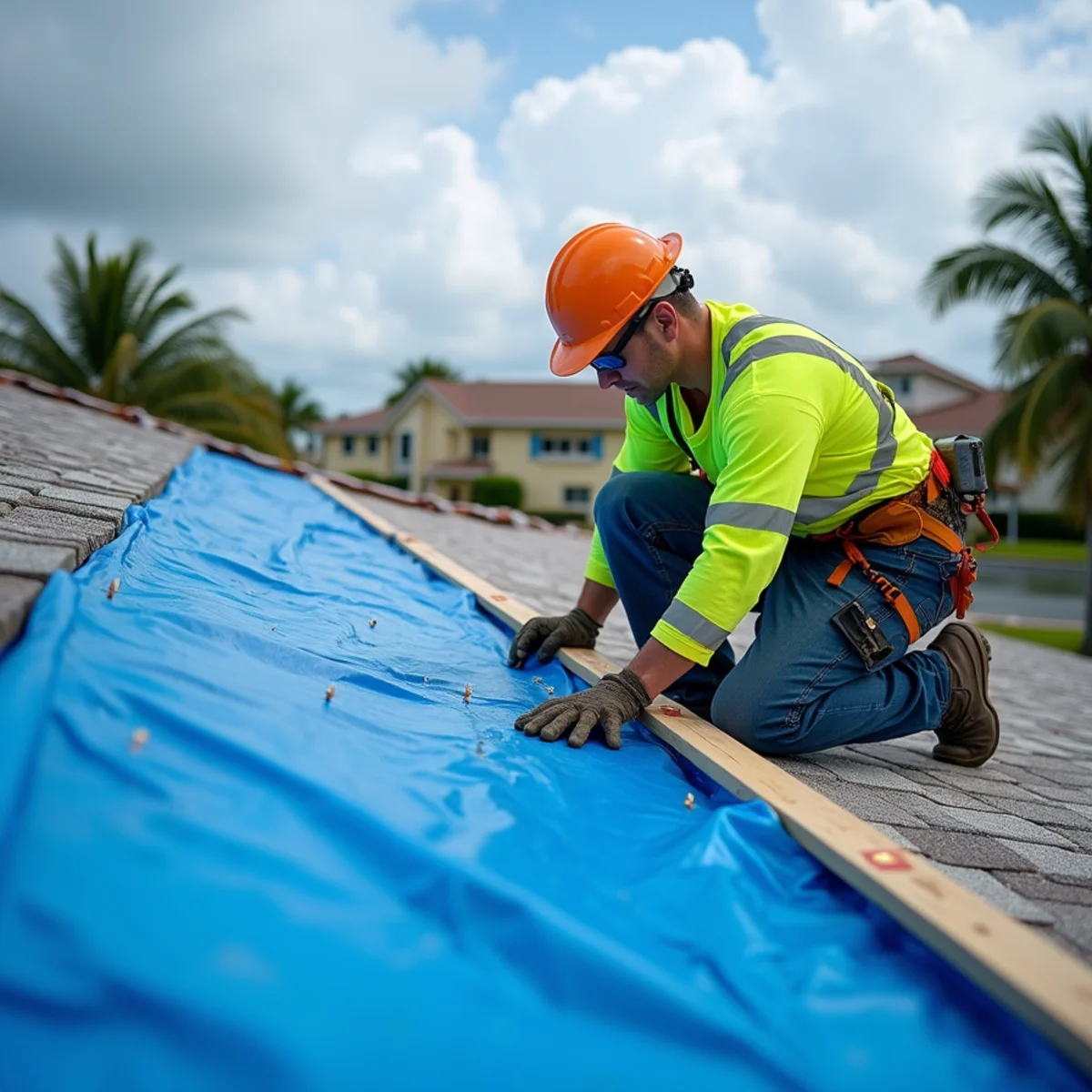
Our emergency crews utilize professional battened tarp installations compliant with Florida Building Code mitigation standards. Heavy-duty, UV-resistant 10-mil woven poly tarps are pulled taut over the damaged slope and wrapped over the ridge crest whenever possible so water cannot enter behind the top edge.
We anchor the tarp using 2x2 dimensional lumber furring strips secured directly into structural roof framing with screws rather than roofing nails that tear through plastic. Furring strips are spaced along all perimeter edges and field seams, creating a watertight mechanical gasket that withstands 45+ mph sustained winds until permanent restoration commences.
Our Inspection-to-Completion Process
Emergency Stabilization & Tarping
Immediate deployment of heavy-duty, reinforced tarps secured with furring strips to prevent secondary water damage to interior ceilings and flooring.
Comprehensive Damage Assessment
Detailed ground-to-ridge physical and photographic inspection identifying wind uplift, crease lines, torn tabs, and compromised underlayment.
Claim Documentation Package
Preparation of high-resolution photo logs, dimensioned damage diagrams, and written repair scopes detailing Florida Building Code compliance needs.
Permanent Code-Compliant Restoration
Structural decking repairs, replacement of damaged sheathing, secondary water barrier installation, and precise shingle/tile re-roofing.
What Affects the Cost of Storm Damage Roof Repair in Clearwater?
Rather than providing arbitrary over-the-phone estimates, our contractors evaluate the exact mechanical conditions of your roof plane to provide an accurate, written scope:
- Degree of structural decking impact: puncture damage from falling oak limbs requires truss bracing and wood sheathing replacement.
- Extent of wind uplift: whether damage is restricted to an isolated corner edge or spans across multiple roof slopes triggering Florida code thresholds.
- Emergency dry-in needs: the size and complexity of emergency tarping or shrink-wrap systems required prior to permanent restoration.
- Material matching feasibility: older discontinued shingles or specialty tile profiles may necessitate broader slope replacement.
Why Pinellas Homeowners Choose Rising Roofers for Storm Damage Roof Repair
Roofing in coastal Florida demands strict technical adherence to building codes and manufacturer specifications. We ensure your home is protected by proven professionals:
Every contractor is vetted for active Florida DBPR licensure, commercial general liability, and mandatory workers’ compensation.
Live emergency intake answers at (773) 207-0769 around the clock. No overseas answering services or unanswered voicemails.
Detailed line-item scopes itemizing labor, materials, permits, and disposal. You approve the exact cost before work begins.
All repairs and installations meet High-Velocity Hurricane Zone (HVHZ) engineering and Florida Building Code wind uplift standards.
Storm Damage Roof Repair — Common Questions
Expert answers regarding Florida building code compliance, timing, and warranties.
You should have your roof inspected as soon as local safety authorities declare conditions safe and winds drop below tropical storm force. Prompt inspection catches hidden punctures and loosened flashings before subsequent afternoon downpours cause interior drywall collapse or mold blooms.
Have More Questions About Storm Damage Roof Repair?
Our local team is on call 24 hours a day at (773) 207-0769 to discuss your Clearwater roof.
Local Pinellas County Communities We Serve
In addition to Clearwater, our certified roofing crews dispatch across the 30-minute north Pinellas corridor: