

Direct Answer: What the Florida 15-Year Roof Rule Actually Means for Homeowners
The 'Florida 15-Year Roof Rule' is not a building code mandate requiring you to replace your roof at year 15; rather, it refers to statutory protections established under Senate Bill 2-D (enacted in Florida Statute § 627.7011). Under this law, an authorized property insurer in Florida may not refuse to issue or renew an insurance policy on a residential structure solely because the roof is 15 years old or older, provided that an authorized roof inspection certifies the roof has at least three (3) years of remaining useful life.
Prior to this landmark legislation, Florida homeowners were routinely receiving non-renewal notices purely because property appraiser records indicated their shingle or tile roof was 15 to 18 years old—even when the roof was structurally immaculate, leak-free, and well-maintained. This statute empowers homeowners to push back against premature reroofing demands by obtaining an official certification from a licensed Florida roofing contractor or home inspector.
The Regulatory Evolution: Senate Bill 2-D and F.S. § 627.7011
Between 2018 and 2022, Florida's private property insurance market entered an unprecedented crisis. Rising reinsurance rates, catastrophic hurricane payouts, and widespread assignment-of-benefits litigation led carriers to enforce aggressive underwriting restrictions. Insurers instituted arbitrary rules refusing to bind coverage on any home with an asphalt shingle roof older than 10 or 15 years, and tile roofs older than 20 years.
Recognizing that thousands of sound, well-built roofs were being forced into premature landfills at enormous cost to working families, the Florida Legislature enacted F.S. § 627.7011(5). The statute states explicitly: 'An authorized insurer may not refuse to issue or refuse to renew a homeowner's insurance policy on a residential structure with a roof that is at least 15 years old solely because of the age of the roof if an inspection of the roof of the residential structure performed by an authorized inspector at the property owner's expense indicates that the roof has 3 years or more of useful life remaining.'
Need Immediate Guidance on Your Clearwater Roof?
Speak with our local coordinator at (773) 207-0769. Open 24/7 with rapid Pinellas County response.
What Happens When Your Roof Turns 15 Years Old in Pinellas County?
If your home is in Clearwater, Largo, Dunedin, or anywhere in Pinellas County, your property appraiser permit date is monitored by insurance underwriting algorithms. As your roof approaches its 15th anniversary, you will typically receive a formal letter from your carrier 60 to 90 days before your renewal date.
The letter typically states that your policy will be non-renewed unless you provide proof of a full roof replacement or provide a certified roof inspection showing sufficient remaining useful life. Do not panic or rush into signing a high-pressure reroof contract. Your statutory right is to arrange a certified inspection.
What the Inspector Evaluates to Certify Remaining Useful Life
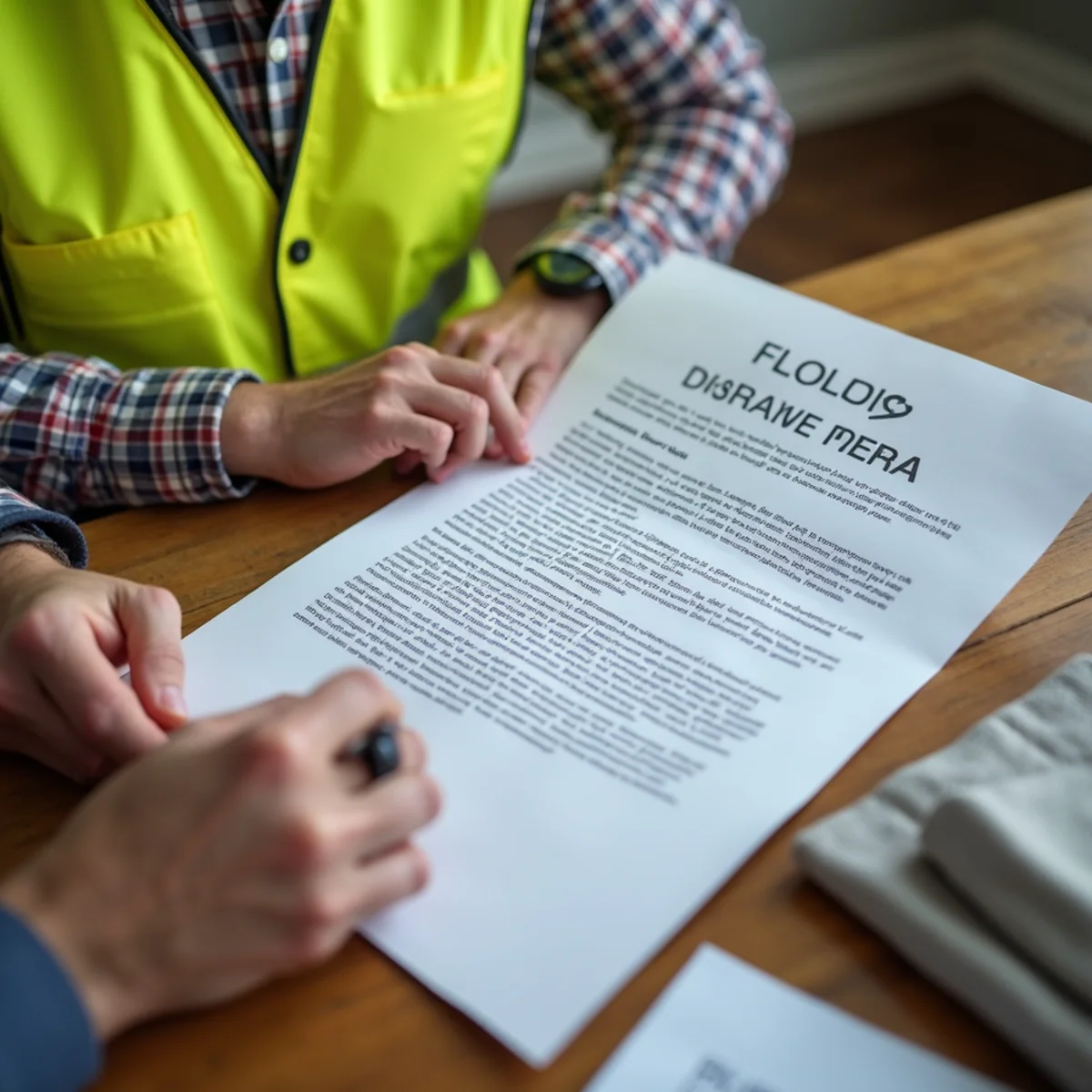
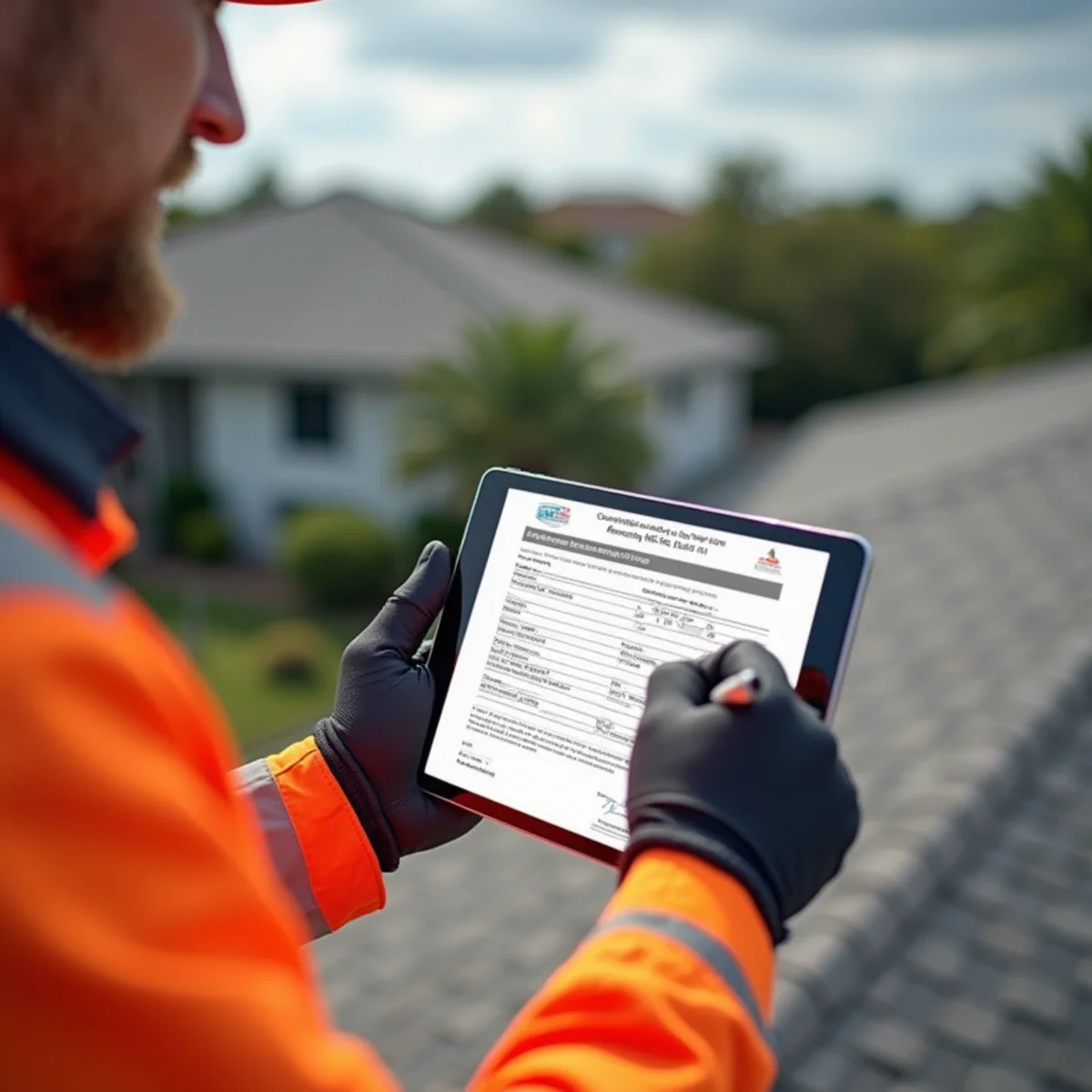
To satisfy statutory criteria, an inspection must be conducted by an authorized professional: a licensed Florida roofing contractor (CCC/CRC license), a certified building contractor, an engineer, or a licensed home inspector. The inspector completes the standardized Florida Roof Condition Certification Form.
During the physical walk-through, the inspector scrutinizes specific condition benchmarks. If the inspector confirms the roof covering is free of major granule loss, active leaks, extensive curling, or rotting deck sections, they sign and seal the document certifying that 3+ years of useful life remain, which you submit directly to your carrier to preserve your coverage.
- Surface Granule Retention: Ensuring asphalt shingles retain sufficient ceramic granule coating to protect the underlying asphalt from solar UV degradation.
- Mechanical Adhesion: Verifying that wind-seal adhesive strips remain bonded and shingles are not lifting or tearing under finger pressure.
- Flashing Integrity: Inspecting step flashing, chimney counterflashing, valleys, and plumbing pipe collars for corrosion or sealant failure.
- Attic Moisture Check: Probing underside decking and rafters for signs of active water intrusion, staining, or fungal rot.
Roofing Material Lifespans vs. Typical Florida Insurer Scrutiny
Different roofing materials age differently under the intense heat and UV rays of coastal Florida. Insurers evaluate materials with distinct underwriting windows.
| Material Type | Average Realistic Lifespan | Carrier Scrutiny Threshold | Typical Certification Lifespan Given |
|---|---|---|---|
| 3-Tab Asphalt Shingles | 12 – 15 Years | 10 Years | 2 – 3 Years remaining if well maintained |
| Architectural Dimensional Shingles | 18 – 25 Years | 15 Years | 3 – 5+ Years remaining if intact |
| Concrete / Spanish Clay Tiles | 35 – 50+ Years (tiles) | 20 Years (due to underlayment) | 3 – 7 Years remaining if underlayment sound |
| Standing Seam Coastal Metal (Aluminum/Steel) | 40 – 60 Years | 25 – 30 Years | 5 – 10+ Years remaining |
What to Do If Your Roof Fails the 3-Year Life Expectancy Inspection
If the inspector discovers extensive unrepairable granule depletion, brittle shingles, rotted decking, or widespread underlayment decay, they cannot ethically certify 3 years of remaining useful life. In this scenario, you have clear choices.
You can request an itemized scope of corrective repairs to bring the roof into certifiable condition, or you can solicit bids for a full roof replacement. Many Pinellas homeowners use this transition to upgrade to architectural dimensional shingles or standing-seam metal, triggering substantial wind mitigation discounts that offset annual insurance premiums.